
We’re updating our Knowledge Base
We’re currently transitioning Ardens Clinical support articles to this new Knowledge Base. Content will be added progressively, so you may find limited articles available at this stage.
In the meantime, you can access our full support resources on our existing sites:
We’ll continue to expand this site, so please check back regularly.
ℹ️ Introduction
This article provides an overview of population health risk stratification models and how Ardens resources can support GP practices and PCNs to identify, segment, and proactively manage patient populations. By the end of this guide, you will understand the key categories of risk stratification, commonly used UK population health models, and how Ardens tools can support service planning, continuity of care, and operational management.
Background
Risk stratification enables GP practices and PCNs to proactively identify and prioritise patients based on their risk of adverse outcomes, complexity of needs, or potential benefit from targeted intervention.
Under the Network Contract DES, PCNs are expected to use population health risk stratification tools to segment and analyse patient populations, supporting the delivery of personalised, proactive, and preventative care.
Risk stratification in this guide is structured into three main categories:
Population: Segmenting the registered population to plan services and target interventions.
Condition Management: Segmenting patients when identifying, assessing, and managing patients with long-term conditions.
Operational Pressure: In addition to assessing patient risk, practices can also use risk frameworks such as OPEL (Operational Pressures Escalation Levels) to monitor and respond to practice pressure risk - ensuring safe workload management and service continuity during times of high demand.
How Ardens Can Help
Ardens provides a range of searches, dashboards, templates, alerts, and reporting tools across EMIS Web, SystmOne, and Ardens Manager to support population health management and risk stratification workflows.
These resources help practices and PCNs to:
Identify high-risk or high-need patients
Support continuity of care
Monitor operational pressures
Review healthcare utilisation
Target preventative interventions
Improve service planning and resource allocation
⚠️ Please note:
Always combine risk stratification results with clinical judgement
Coding accuracy is critical – mis-coded data can under- or over-estimate risk
Consider any local risk stratification requirements defined by your ICB
👥Population Management
Appointments
Practices and PCNs may use risk stratification to identify patients who would benefit from improved continuity of care, particularly those with high healthcare utilisation or complex needs. This can help ensure patients are preferentially booked with their named GP or clinical team, supporting more consistent and proactive care.
Common Models:
Continuity of Care: Supports identification of patients who may benefit from more consistent clinical oversight.
High-Intensity Service Users: Identifies patients aged 18+ with:
High GP attendance rates (>10)
Frequent A&E attendances (.2)
Highest 2% of healthcare spend
Ardens provides:
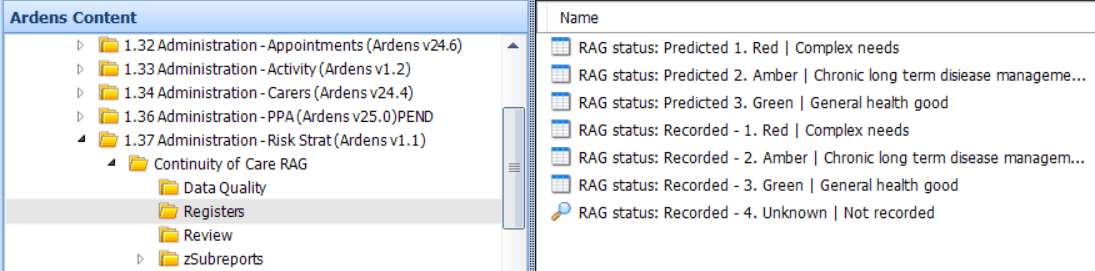
Continuity of Care (RAG) reports built within SystmOne, EMIS and Ardens Manager
Appointment dashboard looking at % patients with named GP + frequent attenders

📈 Planning
Effective population planning requires practices and PCNs to understand the health needs, complexity, and risk profile of their registered population. Risk stratification models can support service planning, resource allocation, and proactive intervention targeting.
Common Models:
Bridges to Health: Categorises the population into need-based segments (e.g. healthy low risk, acute illness, stable chronic, complex chronic, end-of-life) to guide tailored care models
Johns Hopkins: Segments population by morbidity and predicted healthcare use
QAdmissions: Predicts risk of emergency hospital admission at population scale
IMD: Identify communities with highest deprivation-related health risk
Ardens provides dashboards and reporting tools to support:
Population segmentation
Risk identification
Healthcare utilisation analysis
Deprivation analysis
Long-term condition management
Proactive care planning
❤️ Condition Management
Risk stratification can also support practices in identifying patients with long-term conditions, frailty, multimorbidity, or increasing healthcare complexity who may benefit from enhanced review, proactive monitoring, or targeted intervention.
Common Approaches:
Identifying patients with:
Multiple long-term conditions
Frailty
Polypharmacy
High healthcare utilisation
Increasing clinical risk
Unplanned care admissions
Ardens provides resources to support GP practices:
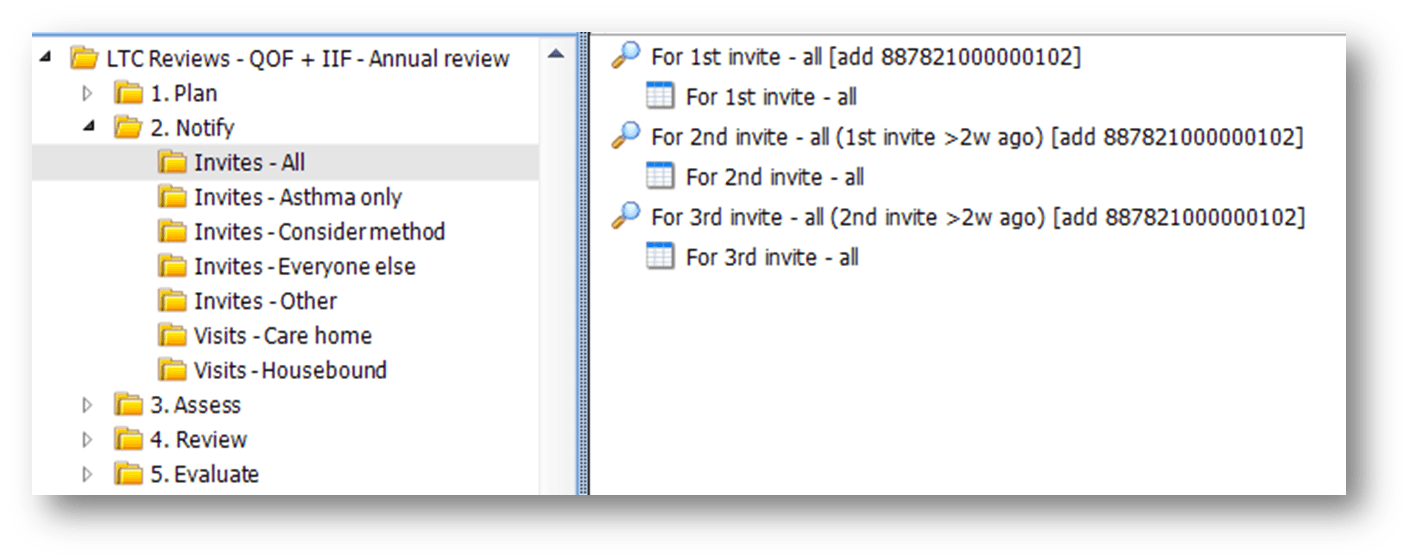
Long term condition recall system
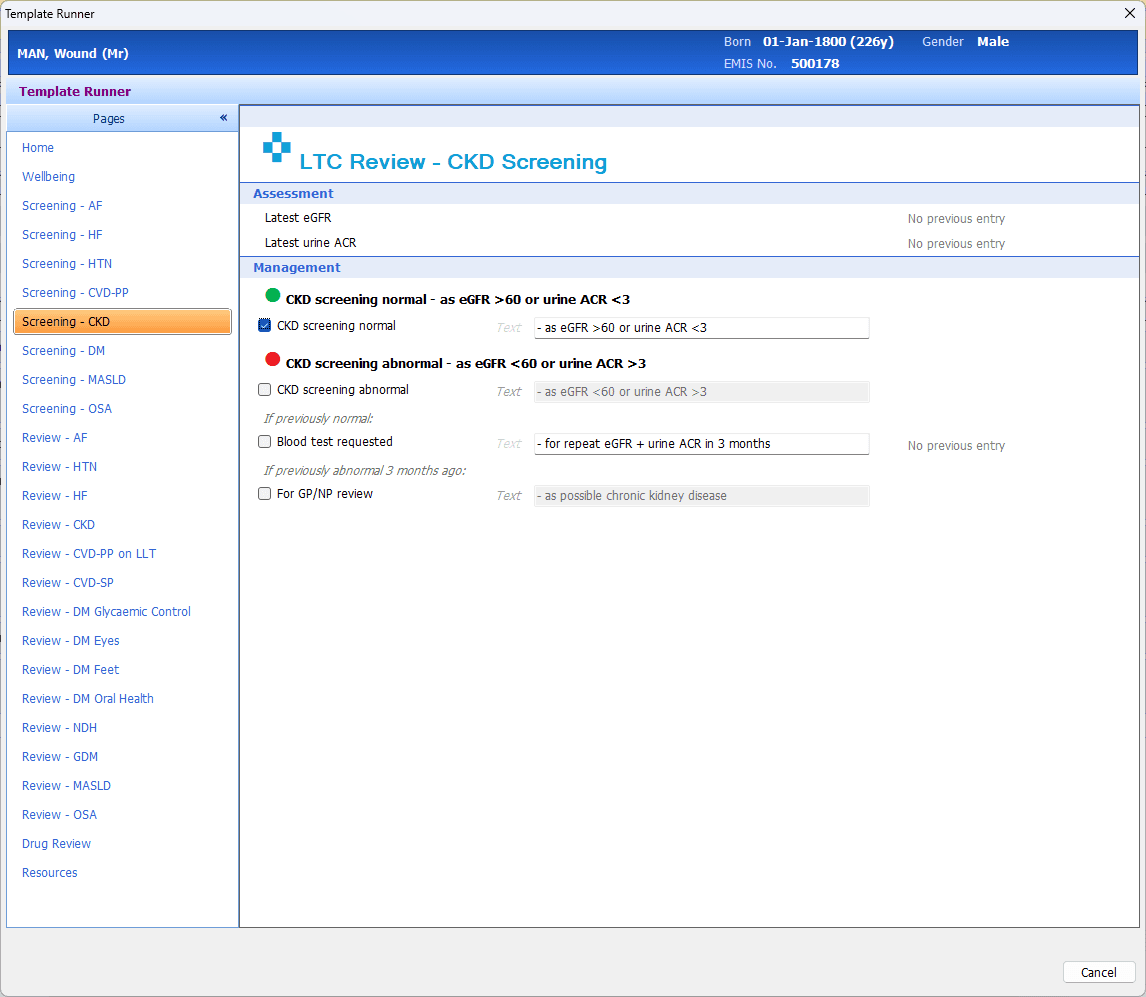
Long term condition template
Condition reports
Condition dashboards
LTC Recall
LTC Template
⏰Operational Pressure Management
In addition to patient-level risk, practices and PCNs may also use operational risk frameworks to help monitor workload pressures, maintain safe service delivery, and support continuity during periods of increased demand.
Common Models
OPEL (Operational Pressures Escalation Levels): Used to assess operational pressures and support escalation planning during periods of increased demand.
Ardens Manager dashboards can support monitoring of:
Appointment demand
Capacity pressures
Workflow activity
Clinical workload trends
Operational risk indicators
❓FAQs
What is risk stratification?
Risk stratification is the process of identifying and grouping patients according to their level of health risk, complexity, or healthcare need.
Should risk stratification replace clinical judgement?
No. Risk stratification tools should always be used alongside professional clinical judgement.
Why is coding accuracy important?
Incorrect or incomplete coding may lead to inaccurate risk identification and population segmentation.
Can Ardens support both EMIS Web and SystmOne?
Yes. Ardens provides risk stratification resources across EMIS Web, SystmOne, and Ardens Manager.
How often should risk stratification reports be reviewed?
Review frequency should be determined locally, but many practices review high-risk cohorts monthly or quarterly as part of ongoing population health management.
🏠Additional Support
To further your understanding of the Ardens resources:
Book training for your GP Practice, PCN or ICB
Contact our Support Team for support in real time