
We’re updating our Knowledge Base
We’re currently transitioning Ardens Clinical support articles to this new Knowledge Base. Content will be added progressively, so you may find limited articles available at this stage.
In the meantime, you can access our full support resources on our existing sites:
We’ll continue to expand this site, so please check back regularly.
ℹ️Introduction
This article explains how to use the Ardens Faecal Immunochemical Test (FIT) resources to support the assessment, investigation, safety-netting, and follow-up of patients presenting with lower gastrointestinal (GI) symptoms for whom FIT testing may be appropriate. By the end of this article, you will understand how to access and use the available templates, reports, and dashboards to support the FIT pathway within clinical practice.
Background
Faecal Immunochemical Testing (FIT) supports the assessment of patients presenting with lower gastrointestinal symptoms where colorectal cancer may need to be considered.
FIT testing is recommended within national guidance to support referral decision-making, alongside clinical judgement, patient symptoms and appropriate safety netting.
How Ardens Can Help
Ardens provides a range of resources to support practices throughout the FIT pathway, including:
Identifying patients who may be suitable for FIT testing
Recording symptoms and clinical indications
Requesting FIT
Reviewing outstanding or returned results
Supporting clinical decision-making and referral pathways
Recording safety netting and follow-up activity
Accessing patient and professional guidance resources
Resources available include:
FIT consultation template
NG12 Cancer Symptoms and Findings Analyser integration
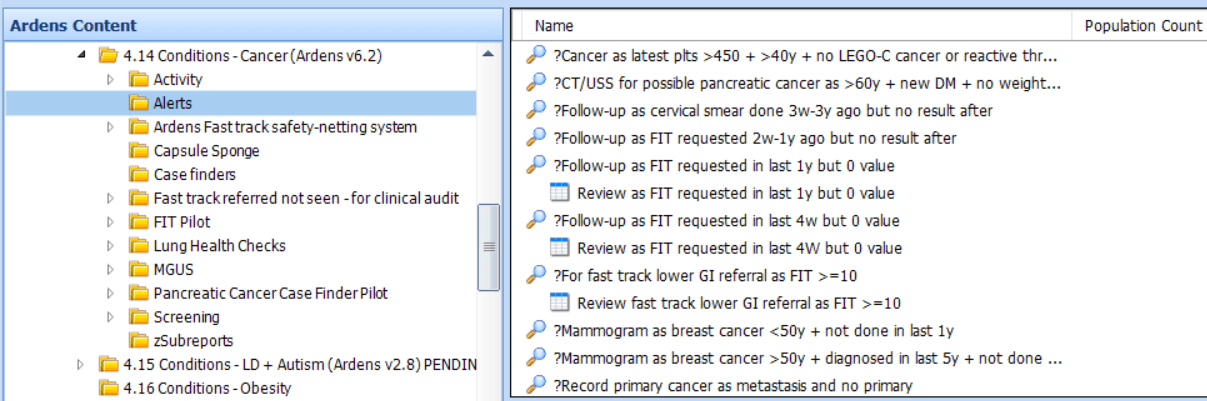
Clinical reports for identification and follow-up
Cancer dashboards within Ardens Manager
🔎 Identify
The following reports can be used to help identify patients who may be appropriate for FIT testing in line with NG12 guidance:
Lower GI FIT test | <60y if iron deficiency anaemia
Lower GI FIT test | <60y if unexplained change in bowel habit
Lower GI FIT test | >50y if unexplained abdominal pain or weight loss
Lower GI FIT test | >60y if anaemia in absence of iron deficiency
These reports can support proactive identification and clinical review of patients who may require further investigation, FIT testing or referral consideration.
🧪 Test & Results
The Ardens "Faecal Immunochemical Test (FIT)" template supports clinicians throughout the FIT testing pathway, including:
Recording symptoms and indications
Requesting FIT
Reviewing outstanding results
Recording returned results
Documenting safety netting and follow-up
Accessing patient and professional guidance resources
The template contains the following sections:
Test
Result not back
Result back
Resources
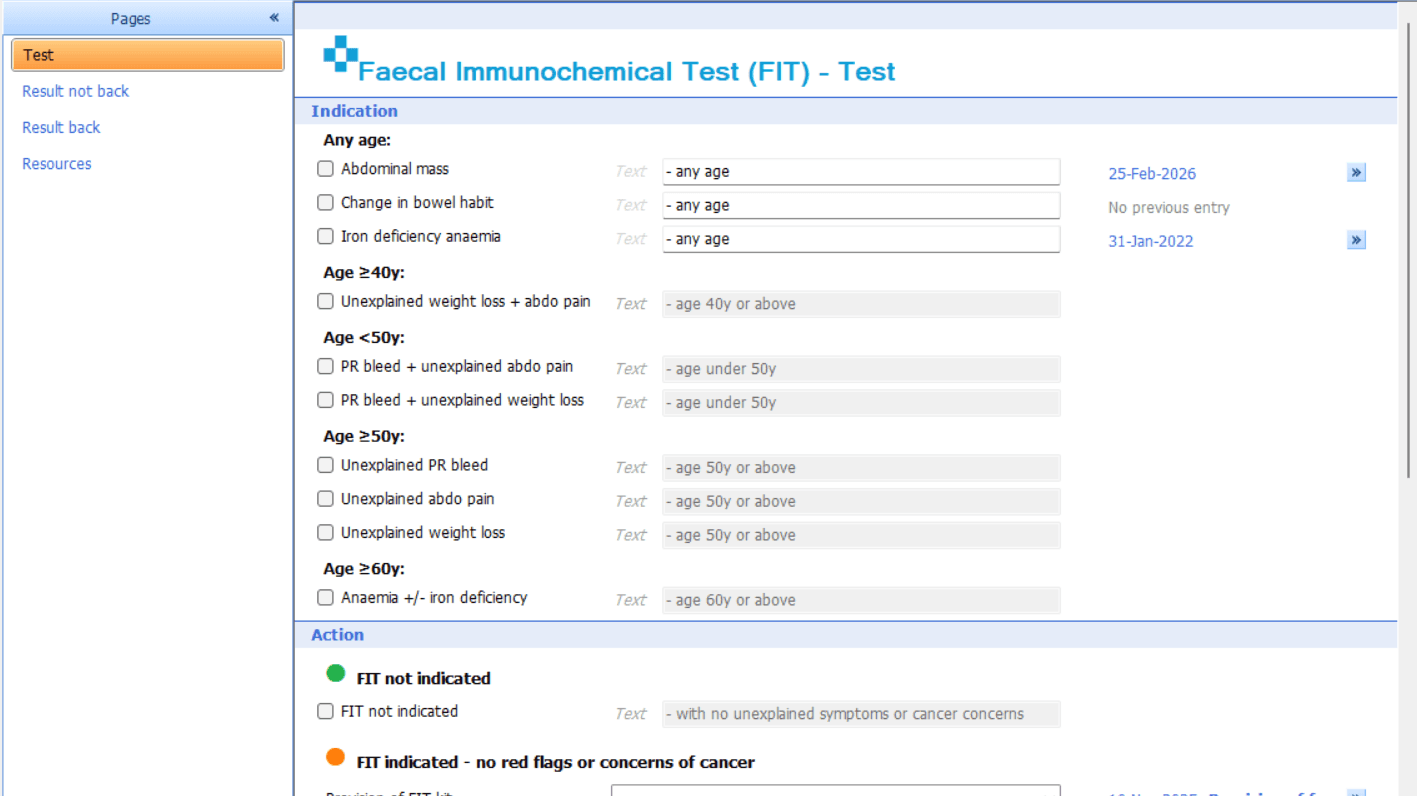
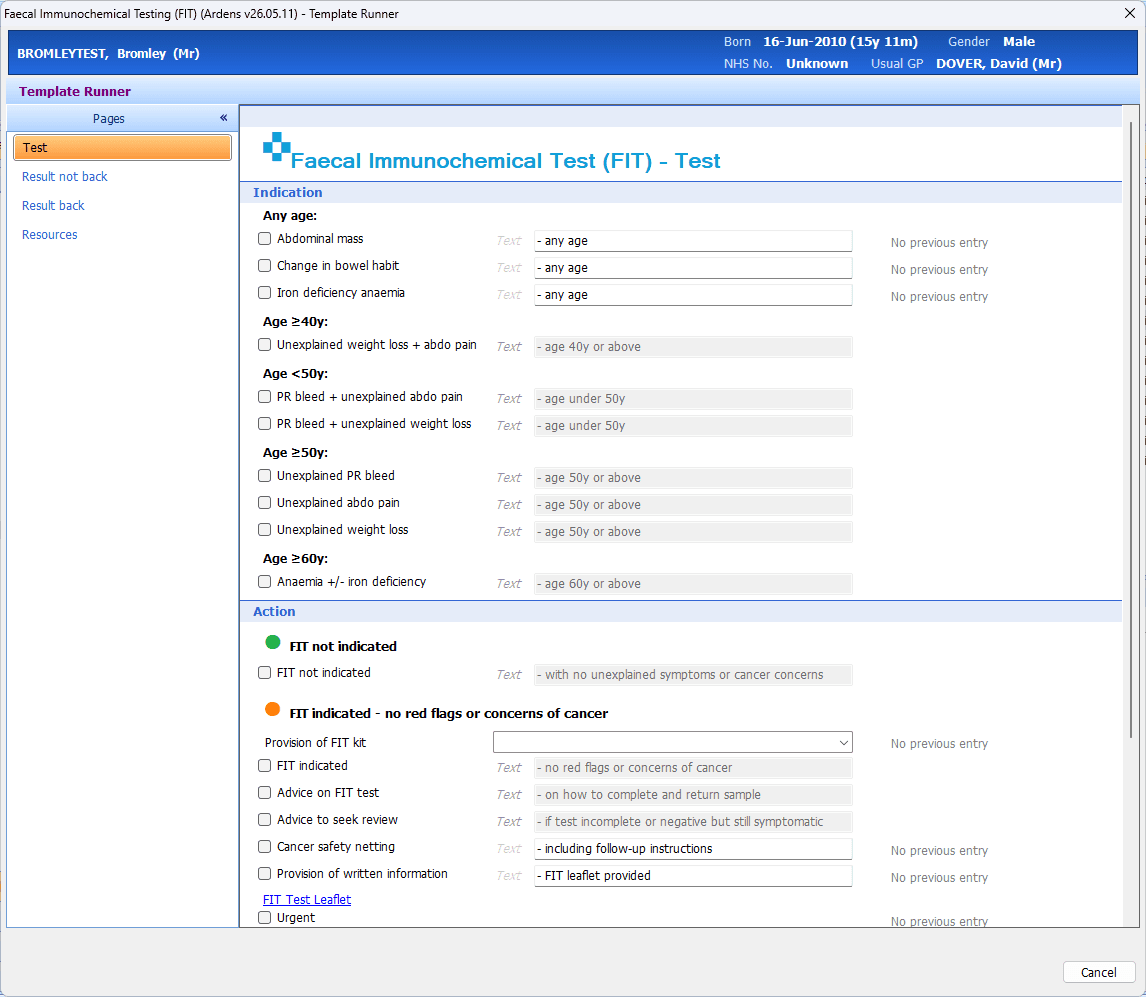
Test
The Test tab is used when requesting a FIT test for a patient presenting with lower gastrointestinal symptoms where FIT testing may be appropriate
This section supports clinicians in:
Recording relevant symptoms and indications
Documenting FIT kit provision
Requesting FIT tests electronically
Recording safety netting discussions
Documenting where FIT testing is not indicated
Clinical prompts and alerts are displayed throughout the template to support clinical decision-making and to escalate when appropriate.
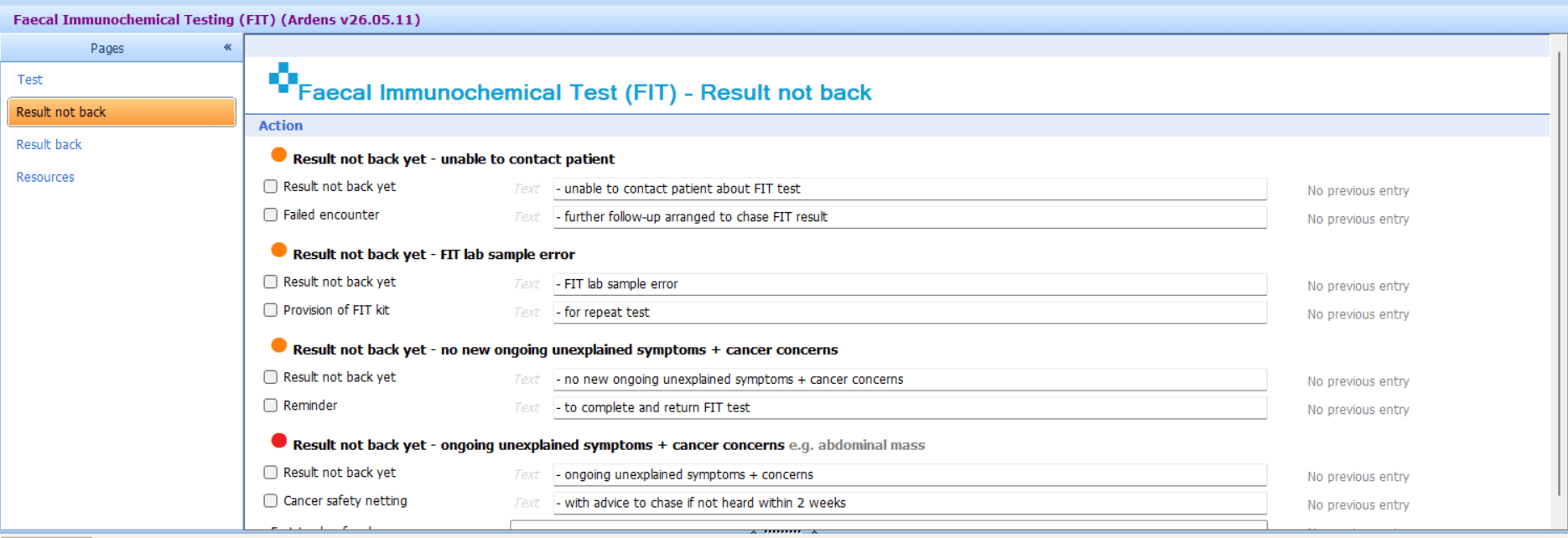
Result Not Back
The Result not back tab supports practices in managing patients where a FIT result has not yet been returned.
This section supports:
Reminder and follow-up activity
Documenting failed contact attempts
Recording repeat FIT kit provision
Arranging additional review where symptoms persist
Supporting safety netting processes
Use this section to document follow-up activity for patients with outstanding FIT results. Options include:
Reminder given
Unable to contact the patient
Sample error/repeat kit required
Urgent suspected cancer referral where ongoing concerns exist
Result Back
The Result back tab is used once a FIT result has been received from the laboratory.
This section supports clinicians in:
Recording FIT results
Reviewing results alongside symptoms and clinical concerns
Documenting follow-up plans
Recording referrals and safety netting
Supporting ongoing clinical review
Test
Within the Test page:
Select the relevant indication(s) based on the patient’s symptoms and presentation
Record whether a FIT kit has been provided
Document any patient advice, safety netting or written information given
Record where urgent review or escalation may be required
The template uses colour-coded sections to support clinical decision-making and help guide the appropriate next steps based on the patient’s symptoms and cancer risk indicators.
Result Not Back
Result Back
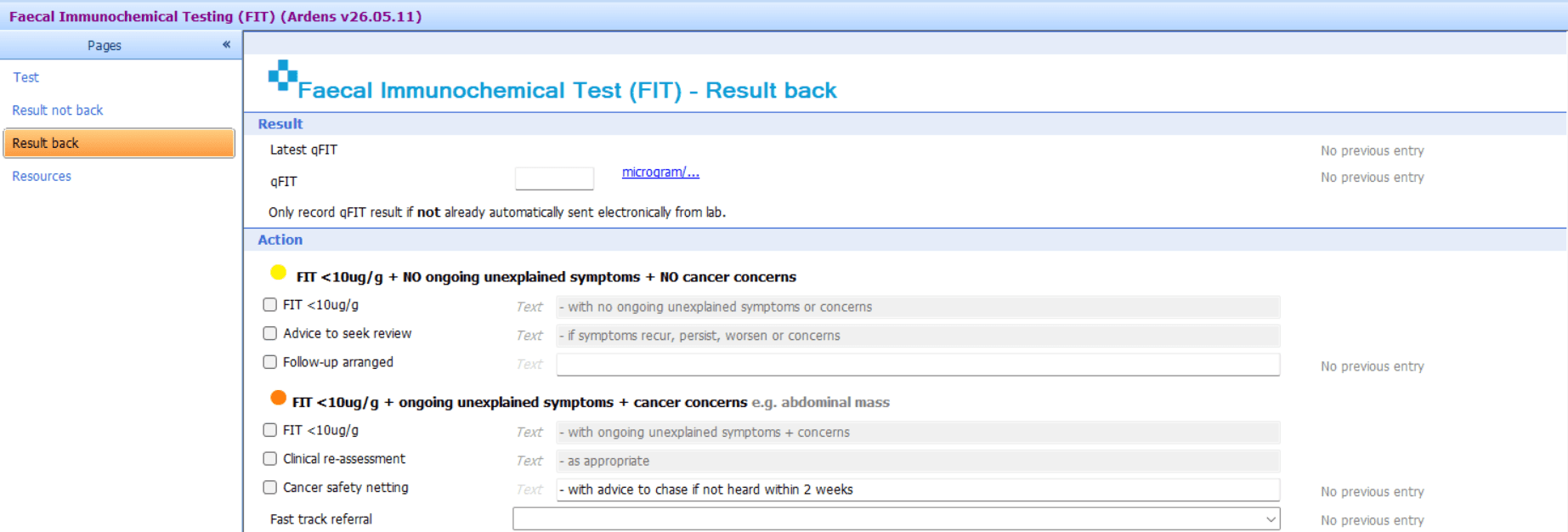
The latest qFIT result can be recorded at the top of the template if it has not already been received electronically from the laboratory.
The template then presents the appropriate management options based on the result and clinical context:
FIT <10 µg/g with no ongoing unexplained symptoms or cancer concerns
FIT <10 µg/g with ongoing unexplained symptoms or cancer concerns
FIT ≥10 µg/g
For each pathway, clinicians can record:
follow-up arrangements
clinical reassessment
cancer safety-netting
urgent suspected cancer referrals where appropriate
The colour-coded sections provide clinical decision support and help ensure that appropriate actions are documented based on both the FIT result and the patient's ongoing symptoms.
Ardens Diary Recall
At the bottom of the page, practices can optionally create a recall using the Ardens Diary Recall System.
This can be used where a repeat FIT test or further follow-up is required, helping ensure patients are reviewed at the appropriate interval.
📁 Resources
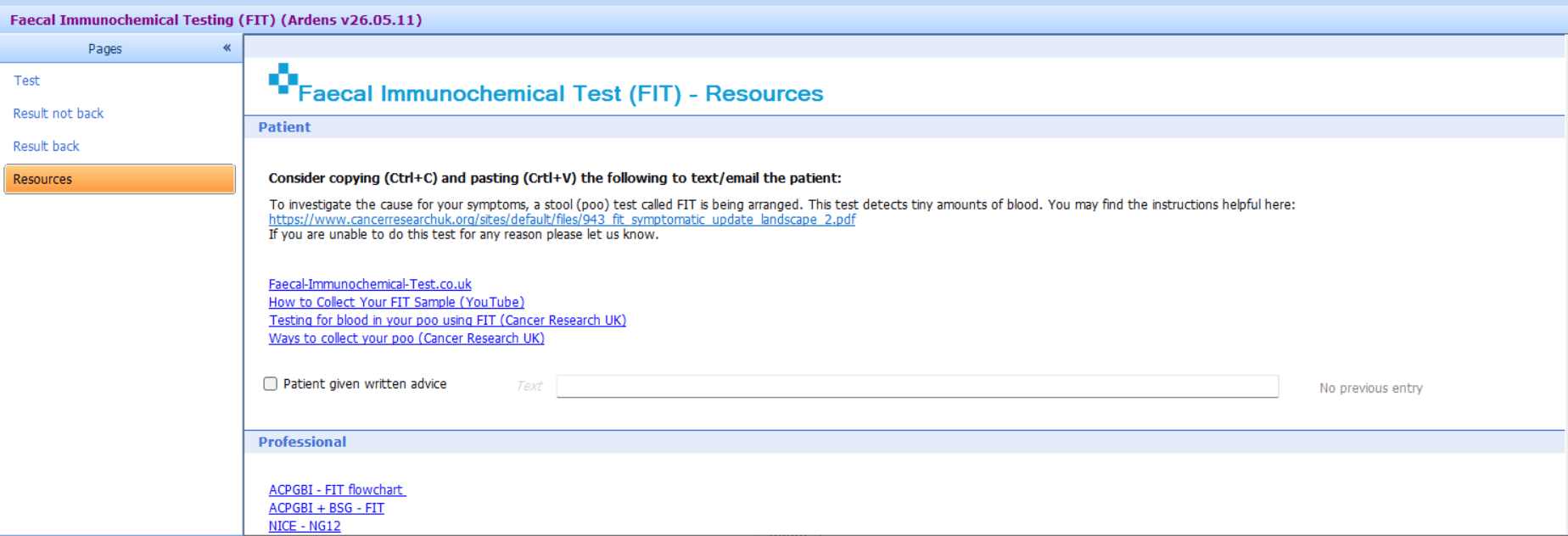
The Resources tab provides quick access to patient-facing and professional guidance relating to FIT testing and lower GI cancer pathways.
This section supports consistent patient information sharing and provides access to national guidance resources.
The Resources tab includes:
Patient information leaflets
FIT guidance websites
Patient videos
Professional guidance resources
NICE and BSG guidance links
Local guidance links where configured
Resources can be used during consultations or shared directly with patients where appropriate.
📊 Monitor
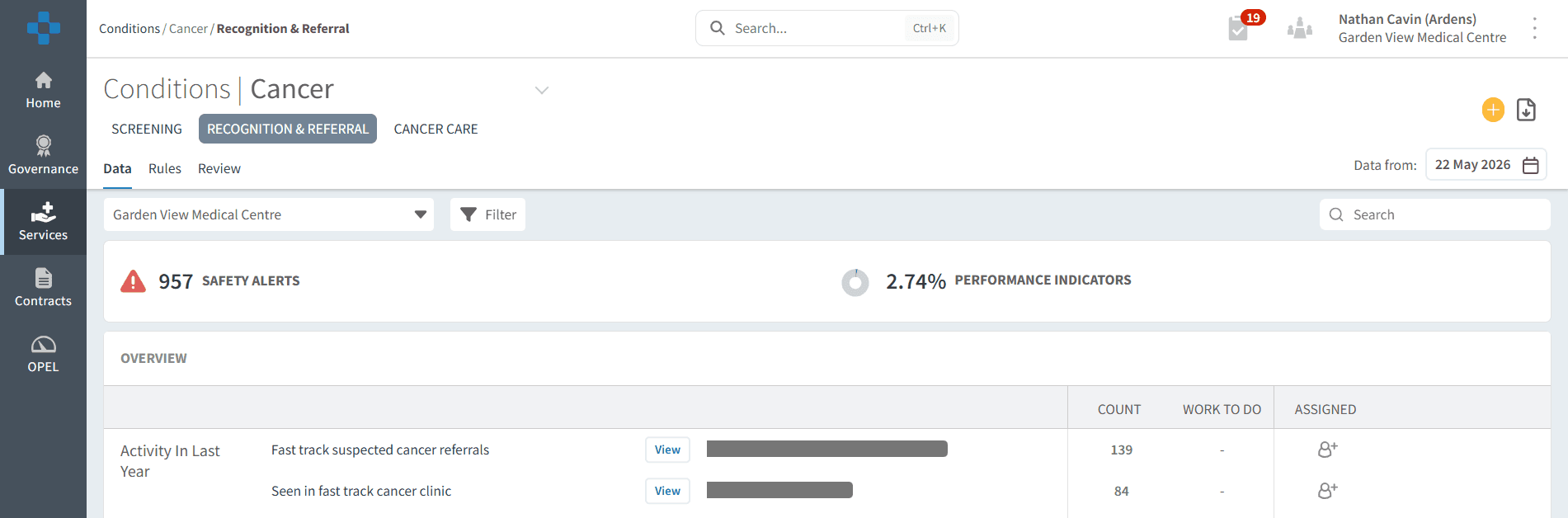
For Ardens Manager subscribers, the Cancer dashboard provides a clear visual overview of all cancer activity.
Login to Ardens Manager
Go to Services on the left-hand pane
Click on Conditions
Click on Cancer
📚 FIT - Pilot
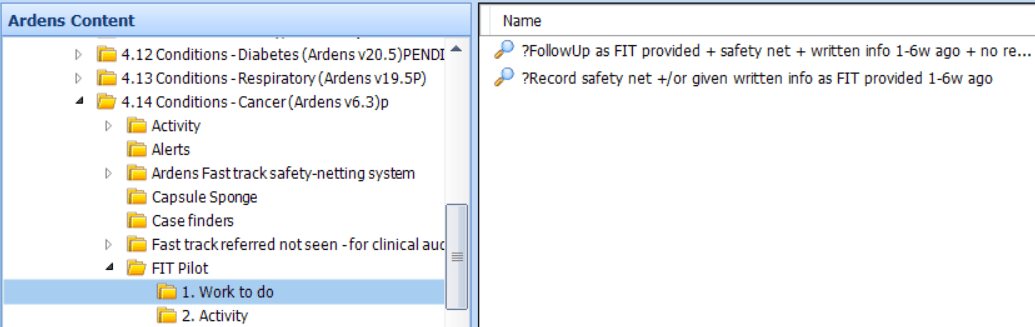
For organisations participating in the NHS England FIT Pilot, reports are available to help identify outstanding work and track activity.
To record activity, clinicians are encouraged to use the Ardens "Faecal Immunochemical Test (FIT)" template.
🏫 Additional Support
To further your understanding of the Ardens resources and how to make the most of Ardens product:
Book training for your GP Practice, PCN or ICB
Contact our Support Team for support in real time