
We’re updating our Knowledge Base
We’re currently transitioning Ardens Clinical support articles to this new Knowledge Base. Content will be added progressively, so you may find limited articles available at this stage.
In the meantime, you can access our full support resources on our existing sites:
We’ll continue to expand this site, so please check back regularly.
ℹ️ Introduction
This article explains how Ardens resources can support your practice in delivering the Respiratory Syncytial Virus (RSV) vaccination programme. By the end of this article, you will understand how to identify eligible patients, manage invitations, record vaccination activity, and monitor RSV uptake.
Background
The NHS England Guidance for the national Respiratory Syncytial Virus (RSV) programme provides vaccination protection for both infants and older adults.
The following groups are eligible:
From 1 September 2026 |
|
How Ardens Can Help
Ardens resources support practices in planning, notifying, delivering, and evaluating vaccination uptake. It includes:
Identifying eligible patients
Organising invitations and recalls
Prioritising co-administration opportunities
Recording vaccination activity
Monitoring uptake and payment activity
⚠️ Please note:
Ardens searches use SNOMED codes, while the Green Book uses clinical definitions
Not all eligibility criteria translate directly into coded data
Business rules for payment may differ from clinical eligibility
Clinical judgement should guide decisions in ambiguous cases
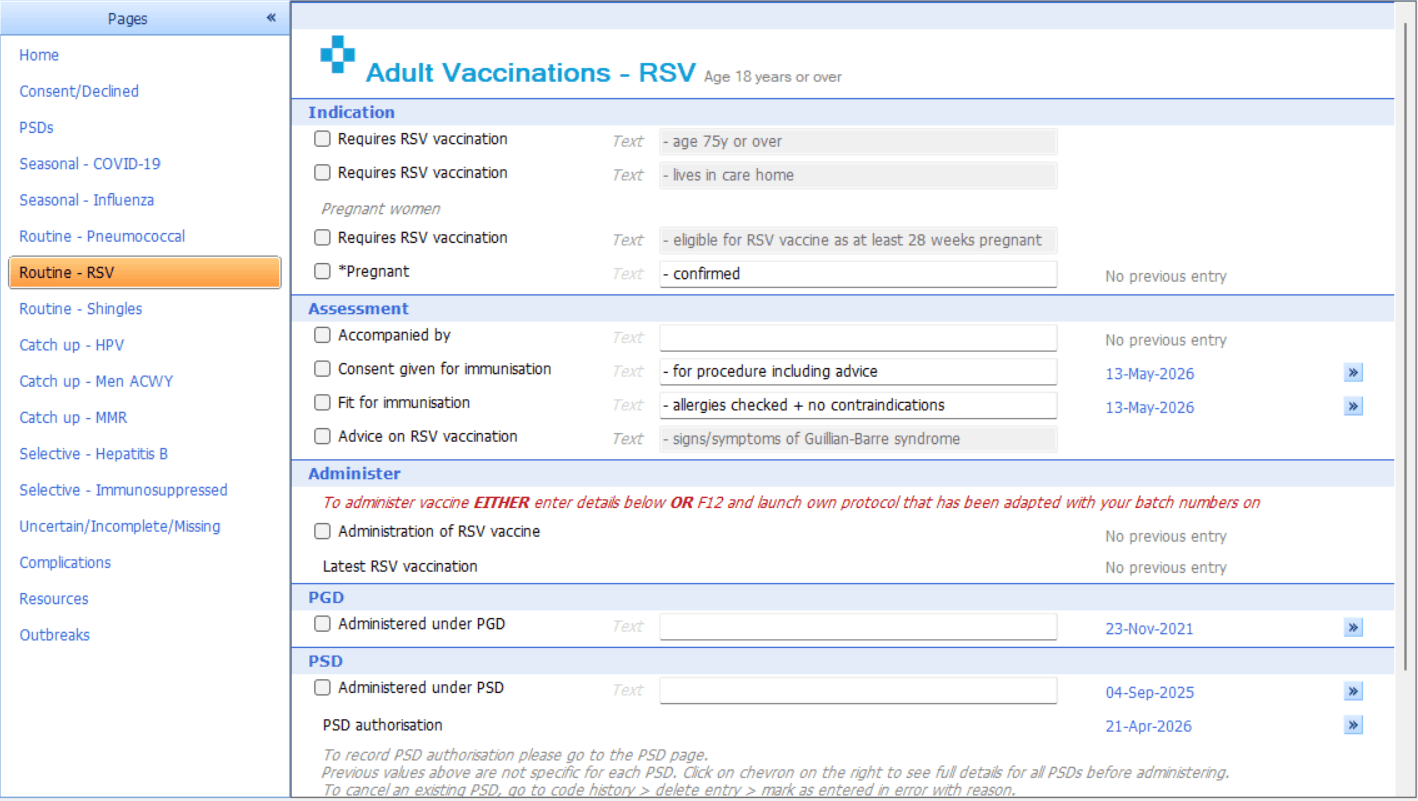

🗓️ Plan
Before sending out any invites, we recommend reviewing the following reports. These will help you to identify your eligible patients and ensure you invite lists are accurate and clinically appropriate.
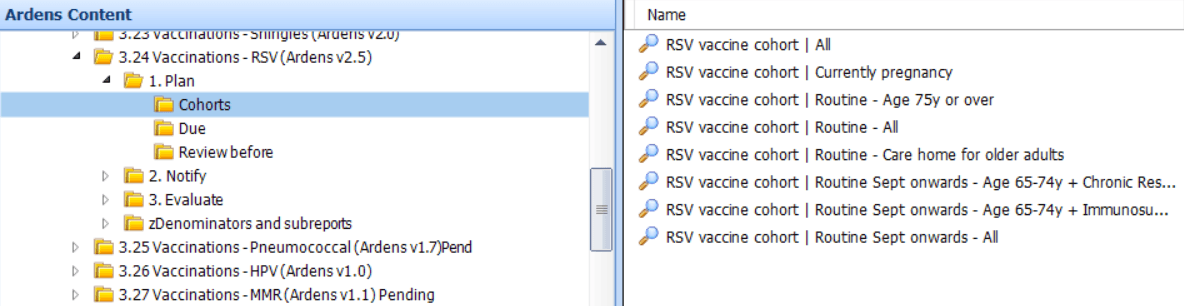
Cohorts
Use these searches to estimate vaccine demand and plan stock orders. They are not intended for sending invitations. These results include all patients in each eligible group, regardless of whether they have already been vaccinated or have declined a vaccination.
⚠️ Please note: The guidance states that all pregnant women from 28 weeks pregnant should be offered the vaccination. However, it is not currently possible to accurately search for the number of weeks pregnant in your clinical system.
If a patient appears unexpectedly in a pregnancy invite or alert, first check whether there is a current pregnancy code or a more recent pregnancy-related code affecting the search result.
Use the relevant cohort search and Check Patient to confirm why they are included.
The alert/search can point staff to a potentially eligible patient, but clinical teams still need to confirm 28+ weeks manually before inviting or vaccinating.
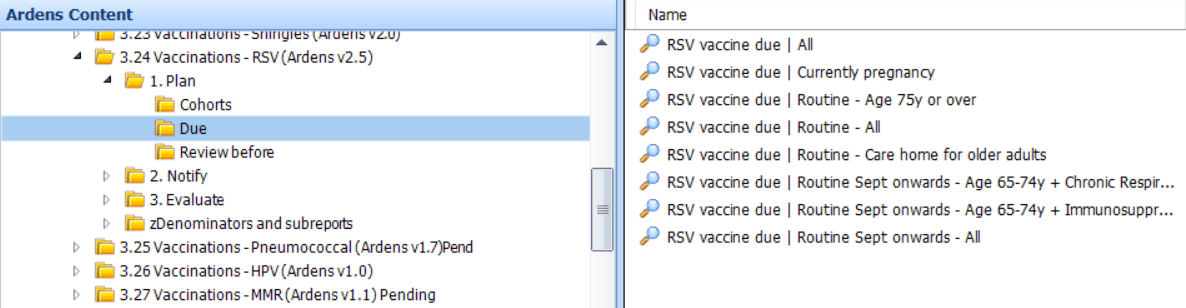
Due
These reports focus specifically on patients who are still outstanding for vaccination and have not declined vaccination. There is a search identifying all patients due, with additional searches broken down by each cohort.
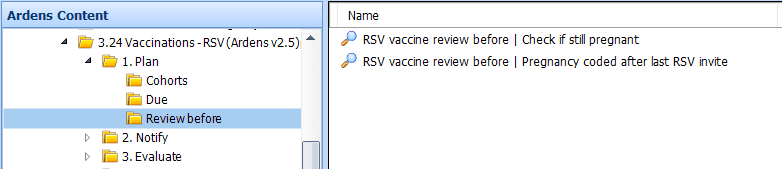
Review Before
The Review Before reports help identify records requiring validation prior to invitation activity. These reports are useful for reviewing and confirming pregnancy coding before invitations are sent.
✉️Notify
These resources help GP practices manage RSV vaccinations by identifying eligible patients and supporting invitation and follow-up activity, including arrangements for care home and housebound patients.
Invites
These reports identify eligible patients who can be invited for the RSV vaccination. The reports are split between routine and pregnancy, and further broken down by 1st, 2nd, and 3rd invitations.
When sending invitations, only the following invite codes can be used:
RSV vaccination invitation letter - 2242701000000103
RSV vaccination invitation SMS text message - 2242691000000103
Patients are excluded from invitation reports only if they have one of the following codes recorded:
Administration of RSV vaccination
RSV vaccination contraindicated
RSV vaccination declined
Patients move through the invitation reports using the appropriate invite codes, with a two-week interval between the first and second invitations and again between the second and third invitations.
⚠️ Please note: Patients should not be vaccinated before they enter the specified programme age range, or become the specified number of weeks pregnant. Therefore, a patient who reaches their 75th birthday on the 1st December can only be vaccinated from that date, and a patient who is 20 weeks pregnant at the start of the programme should not be vaccinated until they reach at least 28 weeks of pregnancy.
Visits
Separate visit reports are provided for housebound and care home residents so practices can use the list of patients to support administration outside of the practice.
Invites
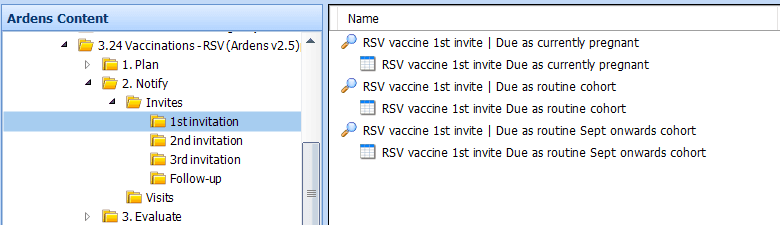
Once the reports have been run, view the results to see details of the patients, including any reasonable adjustments and preferred contact methods. The report can be exported to use with third-party messaging platforms. Access this support article on how to export.
When running the Invite searches, use a relative run date that matches the planned date of your RSV clinic.
Visits

💉Deliver
To support vaccine delivery and ensure accurate coding, a template and protocol are available for consistent and efficient documentation.
Alert
To alert practice staff to eligibility.
Template
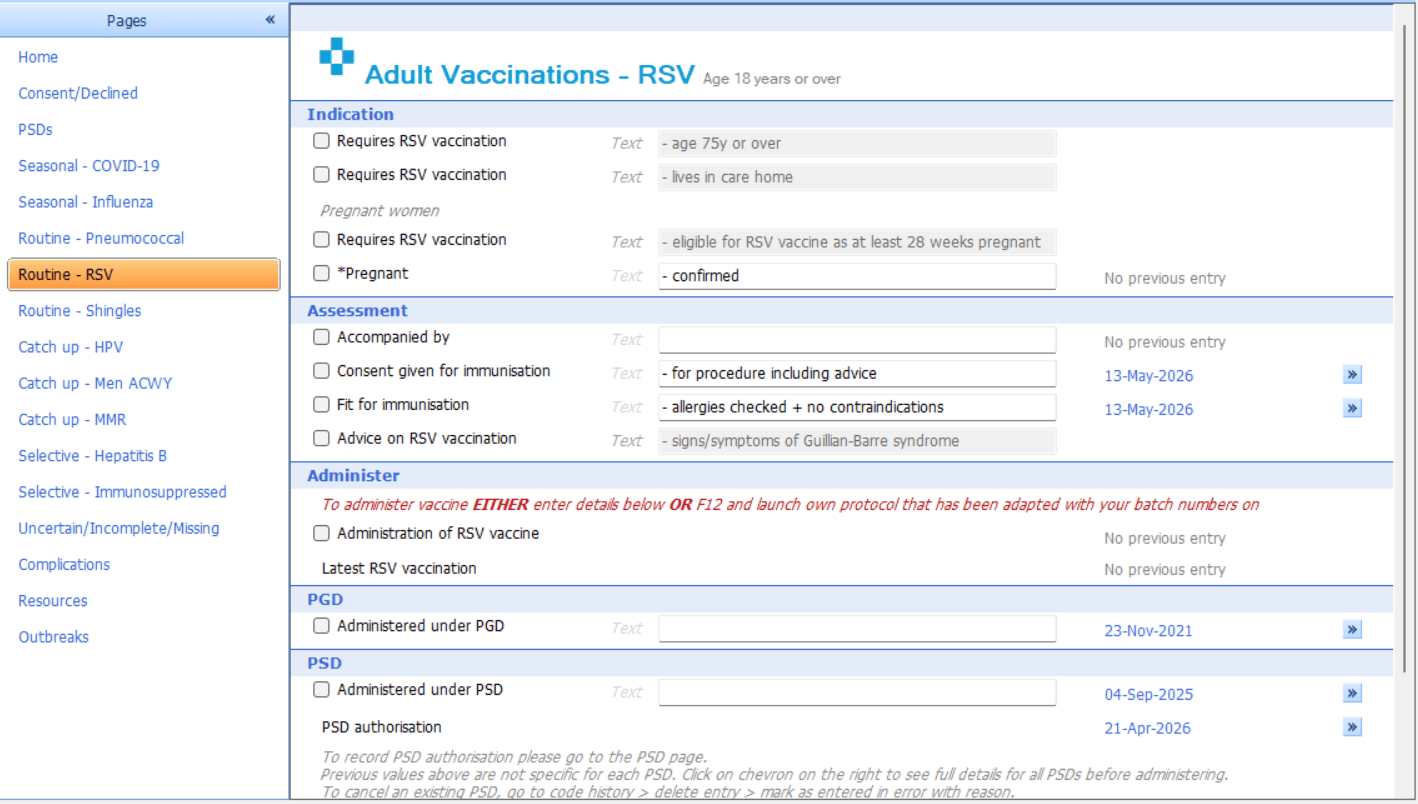
Enables the recording of RSV vaccination, along with consent, contraindication and declines.
Protocol
Allows easy access to record that a vaccine has been given, along with consent, contraindication and declines.
Alert
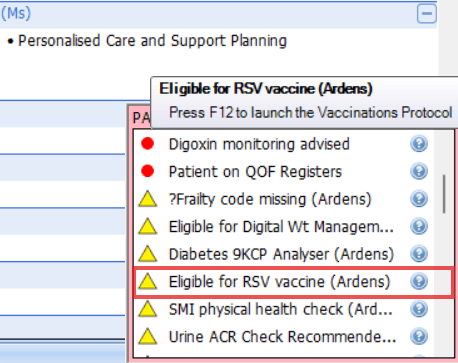
Double-click on the pink box alert to access a template that allows you to record administration of the vaccine.
The RSV eligibility alert in the pink box will only appear for patients who meet the original criteria, i.e., pregnant or aged 75 years and over, and living in a care home. We are unable to accurately build the concepts required to add in the new cohort, aged 65–74, who have immunosuppression or chronic respiratory diseases. This is due to the size of the code list and the potential safety risk of an error. These patients will currently not have an alert showing. However, you can see full eligibility by using the searches in '3.24 Vaccinations - RSV'
Template
Protocol
The 'RSV Vaccination Administration' protocol is manually accessed via the F12 key. Before clinicians can begin using the protocol, you must first ensure it is fully edited with the relevant vaccination details (e.g. batch numbers, expiry dates etc). To edit the protocol, refer to this support article.
Once edited, each clinician will need to add the protocol to their F12 key:
Open a patient record and press F12
Right-click on an available letter or number, then select Add
Search for and select the saved local copy of the "RSV vaccination administration" protocol
The protocol is now ready for use:
Press F12 and select the local copy of the "RSV vaccine administration" protocol.
This will launch a consultation window. Update the Consultation Properties screen if required.
A multiple-choice prompt will appear—follow the on-screen prompts to enter the appropriate vaccine information into the patient record.
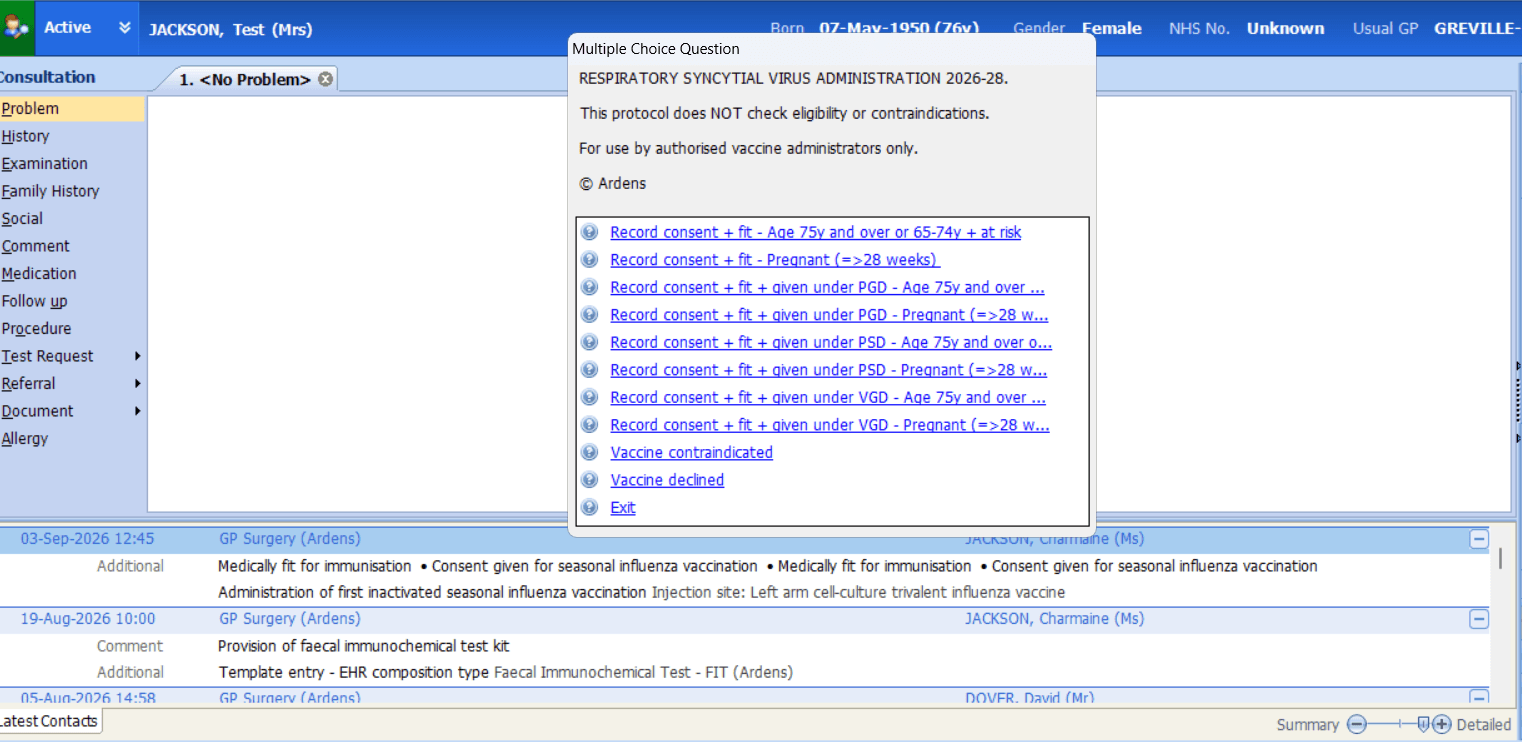
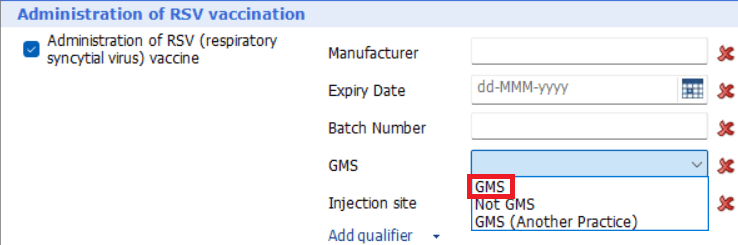
⚠️ Please note: In order for the RSV vaccination to be correctly included in the CQRS extract, administration of the vaccine must be recorded as GMS.
📈Evaluate
These resources help practices manage and monitor the RSV vaccination programme by tracking vaccination uptake, identifying patients who are still due for vaccination, and providing an overview of patients with recorded contraindications or declined vaccination codes.
Review After
The Review after folder highlights potential data issues that could affect payment.
The report 'RSV review after I ?Consider adding pregnancy code on same day as RSV vaccination in L1M' identifies patients who appear to have received an RSV vaccination under the pregnancy programme but do not have a pregnancy code recorded on the same date as the vaccination. To support payment, a pregnancy code must be recorded on the same day as the RSV vaccination.
Activity
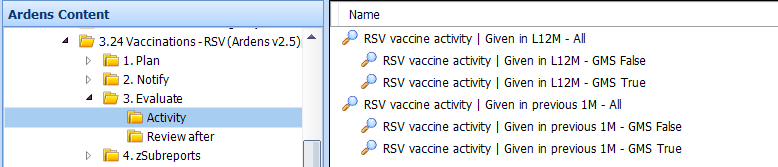
This folder enables monitoring of all vaccinations given, broken down between those recorded in practice and those recorded elsewhere. It also identifies those recorded as contraindicated or declined.
Uptake
This folder enables monitoring uptake for each cohort.
Insights
For Ardens Manager subscribers, the Vaccinations dashboard provides a clear visual overview of:
Eligible cohorts
Number of invitations sent
Vaccination uptake rates
This helps you prioritise and target specific patient populations more effectively.

Review After

Activity
❓FAQs
Why is a patient clinically eligible but not showing in payment reporting?
Clinical eligibility, search inclusion and payment extraction do not always work in exactly the same way. If this happens, first check the Review after reports, then review the patient record and coding detail before assuming the search is incorrect.
Why has a vaccinated patient not dropped out of a report yet?
This can happen if the report has not yet refreshed, or if the coding recorded does not match what the report is expecting. Re-run the relevant report, then use Check Patient or review the patient record to confirm how the vaccination was coded.
Why is a patient appearing in an RSV pregnancy report when they are not currently pregnant?
This is usually linked to pregnancy-related coding on the record. Check for a current pregnancy code, a more recent pregnancy-related code, or outcome coding that may affect how the report reads the record.
What should I check if a patient appears in the wrong RSV cohort?
Run the relevant cohort or due search and use Check Patient to confirm why they are included or excluded. Also review care home status, pregnancy coding, and recent vaccination / decline / contraindication coding.
Why do some pregnant patients move back into the 1st invite reports?
This usually occurs when a new pregnancy-related code has been added after the original RSV invite was recorded.
Why should a relative run date be used?
For EMIS practices, using a relative run date helps ensure patients remain eligible on the planned clinic date.
🏫Additional Support
To further your understanding of the Ardens resources:
Book training for your GP Practice, PCN or ICB
Contact our Support Team for support in real time