
We’re updating our Knowledge Base
We’re currently transitioning Ardens Clinical support articles to this new Knowledge Base. Content will be added progressively, so you may find limited articles available at this stage.
In the meantime, you can access our full support resources on our existing sites:
We’ll continue to expand this site, so please check back regularly.
ℹ️ Introduction
This article explains how to use the Ardens resources to support the NHS Pancreatic Cancer Case Finding Pilot. By the end of this article, you will understand how to identify eligible patients, complete assessments using the Ardens template, and monitor patient outcomes through reporting.
Background
Pancreatic cancer is often diagnosed at a late stage due to non-specific symptoms, making early identification essential to improving patient outcomes. NHS England launched the Pancreatic Cancer Case Finding Pilot to support earlier investigation in higher-risk patients.
The pilot focuses on patients aged 60 years and over with either:
A new diagnosis of diabetes within the last year, or
Raised HbA1c levels
Patients are then assessed for unintentional weight loss to determine eligibility for further investigation.
How Ardens Can Help
Ardens provides a suite of resources to support practices throughout the pilot , including identifying eligible patients, recording consultations, and monitoring outcomes.
The resources include:
Case finder / work to do reports
Pancreatic Cancer Case Finding PILOT template
Outcome reports
Ardens Manager dashboards for participating organisations
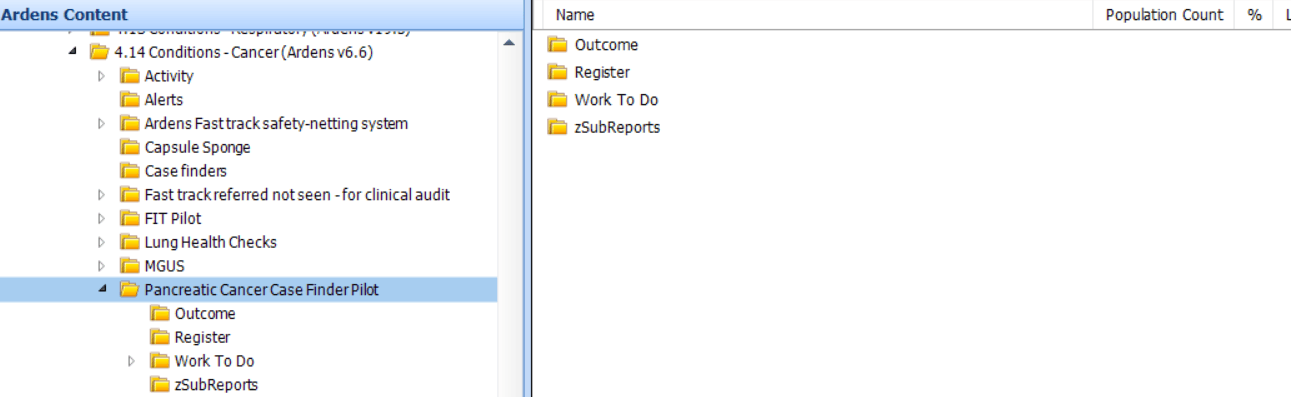
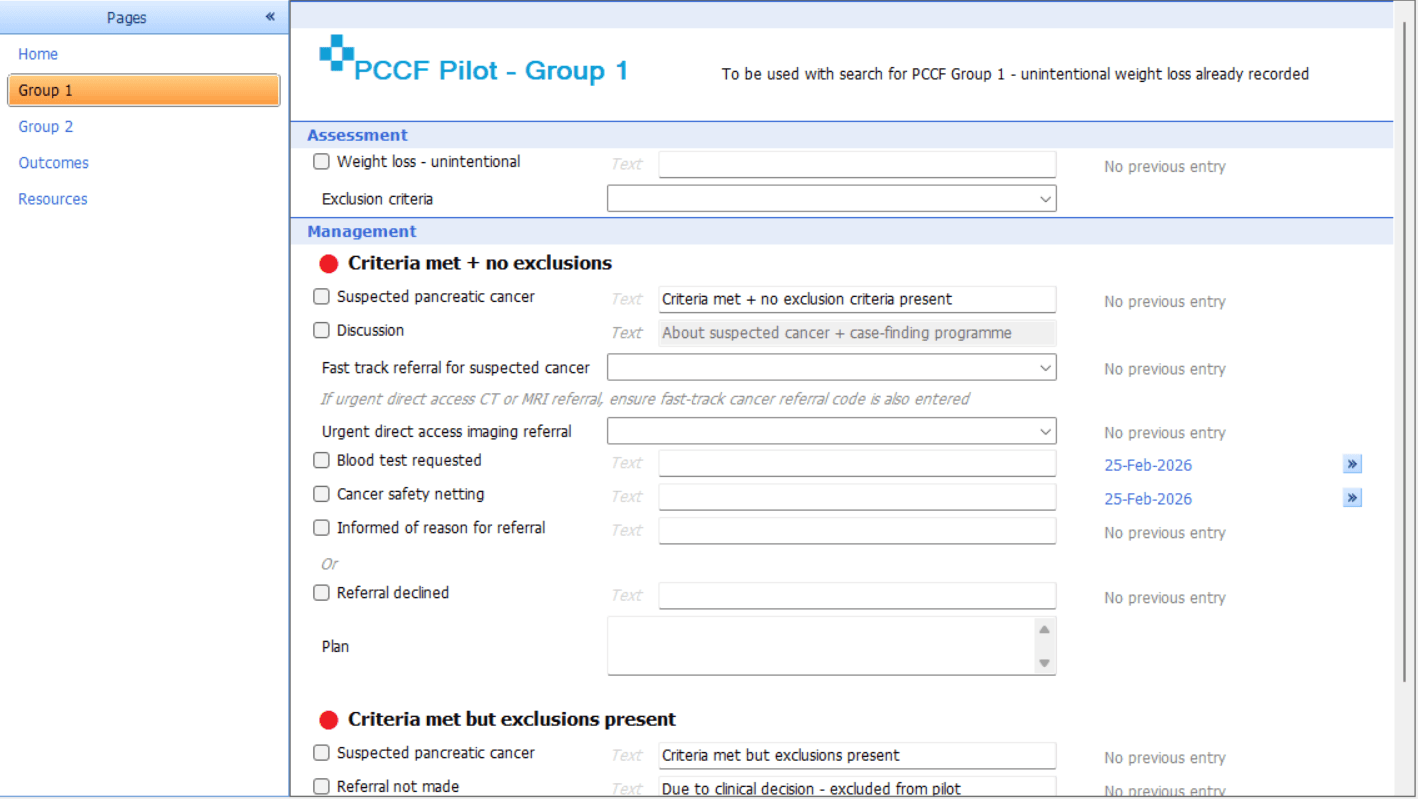
🔍Identify Eligible Patients
Reports are available to help practices identify patients who may meet the pilot eligibility criteria.
The pilot includes patients aged 60 years and over who either have a raised HbA1c or received a new diagnosis of diabetes within the last year. These patients are divided into two groups:
Group 1: Patients where unintentional weight loss is already documented.
Group 2: Patients where no weight loss is recorded. These patients can be proactively identified and reviewed to determine their weight trend.
The reports are broken down by:
Registers: Identify patients who may be eligible for the pilot and can be used to support planning
Case Finders / Work To Do: Identify patients who require review or further action.
The reports cover different time periods, depending on when the practice joined the pilot. This helps practices identify patients who may have been missed during earlier stages of the programme.
Phase 1: 1/6/24 - 31/5/25
Phase 2: 1/11/24 - 31/10/25
Phase 3: 1/11/25 - 31/3/26
Phase all: Last 3 years (after 31/5/25)
In addition, there are review reports that can be used to identify patients who may be suitable for inclusion in the pilot, as well as patients where an outcome may need to be followed up or chased.

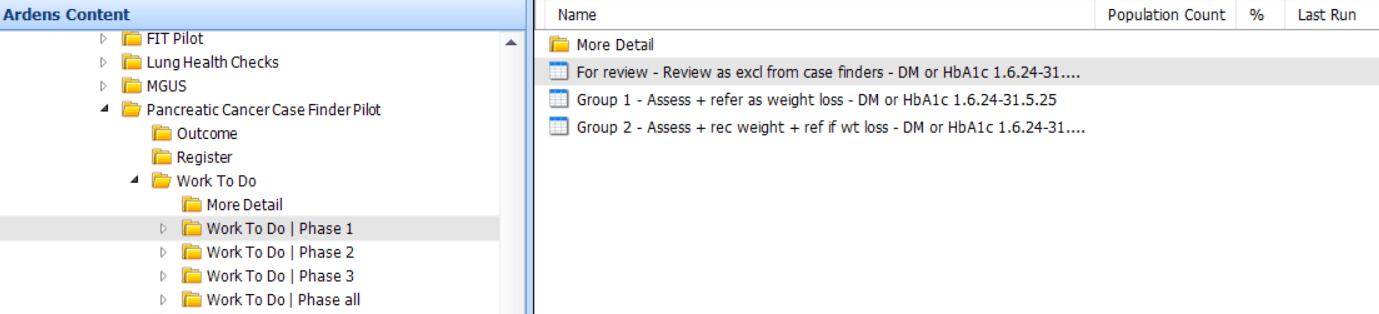
📝 Record Consultation
Once the patients have been identified for the pilot, the Ardens Pancreatic Cancer Case Finding Pilot template can be used to assess the patient and record the outcome.
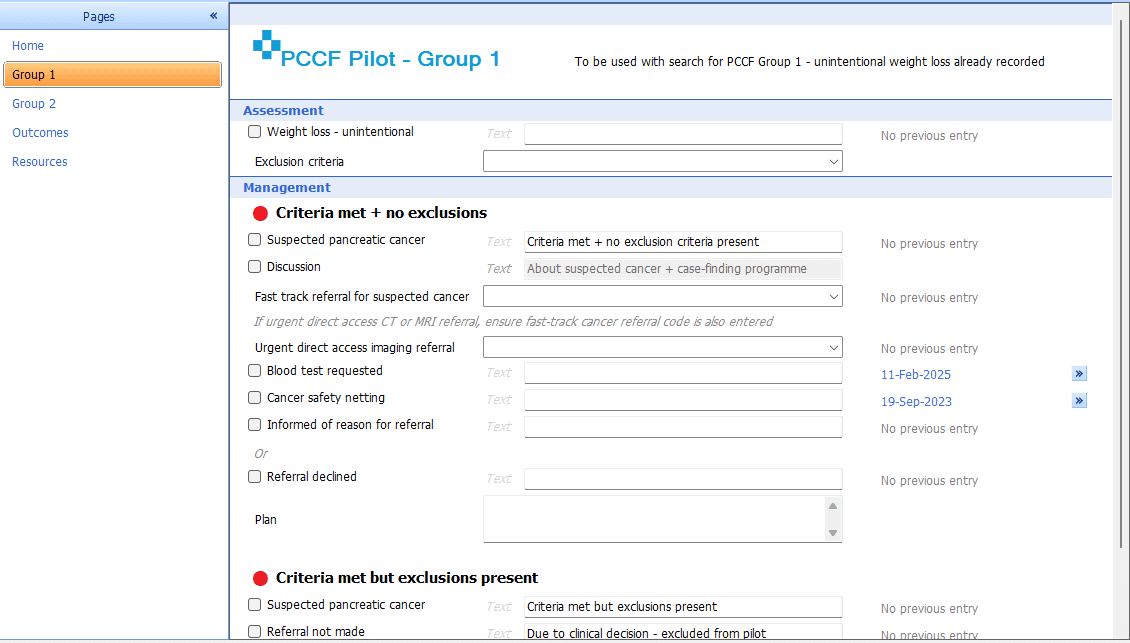
The Group 1 page is used for patients with documented unintentional weight loss. This page allows clinicians to record assessment findings, review exclusion criteria, and record management decisions.
The Group 2 page supports proactive assessment of patients without a prior history of weight loss. Clinicians can record weight and BMI, review exclusion criteria and record next steps.
⚠️Please note: Patients may still require further investigation, referral or follow-up based on clinical judgement, even if they are excluded from the pilot pathway.
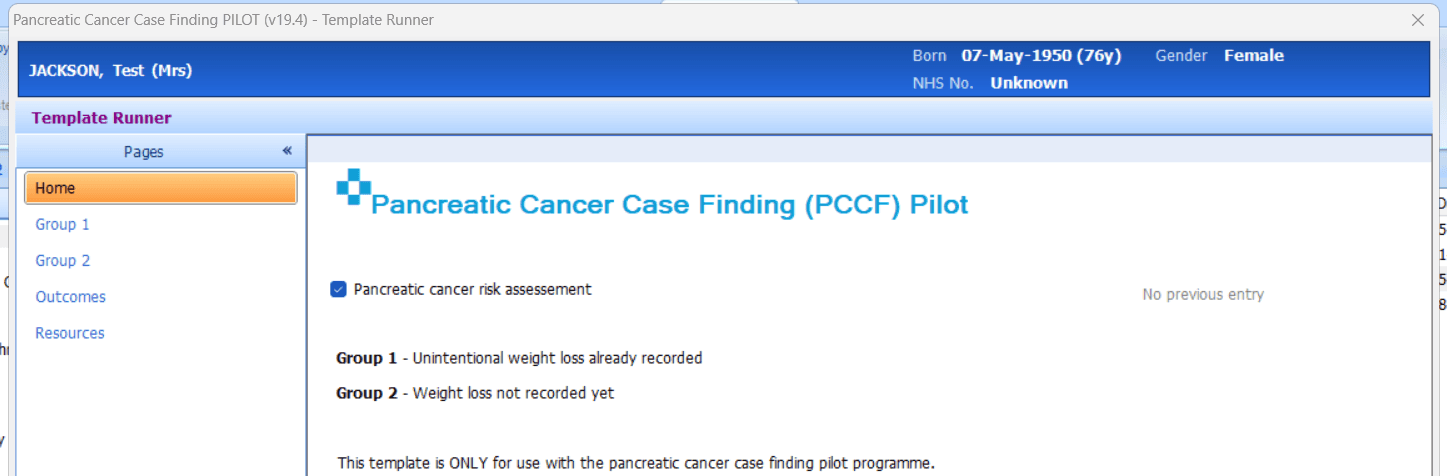
Home Page
Select ‘Pancreatic cancer risk assessment’ to record that an assessment has been completed for the patient.
Once the information has been saved, the relevant reports will automatically update to show that the patient has been reviewed.
Group 1
Group 2
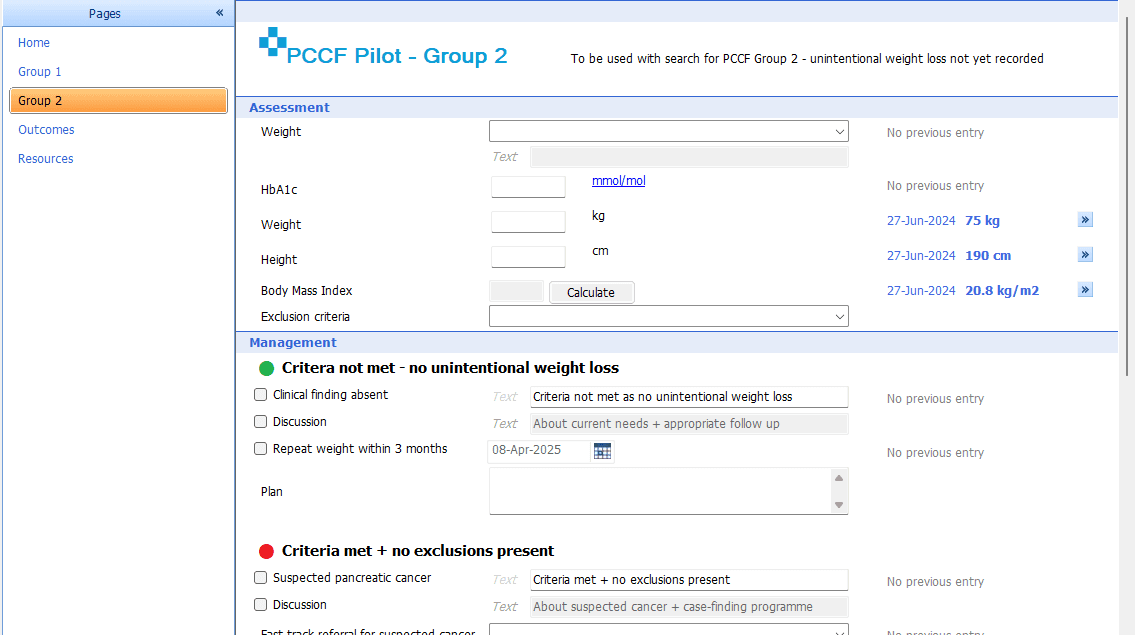
Each group page is divided into the following sections:
Assessment: Record whether unintentional weight loss has been identified and, where applicable, select any relevant exclusion criteria from the drop-down list. The exclusion criteria help determine whether the patient remains eligible for the pilot pathway.
Management: This section is divided into different pathways depending on whether any exclusion criteria have been identified.
Plan: A free-text Plan box is available to record any additional clinical information, notes, or agreed follow-up actions.
➡️Review Outcomes
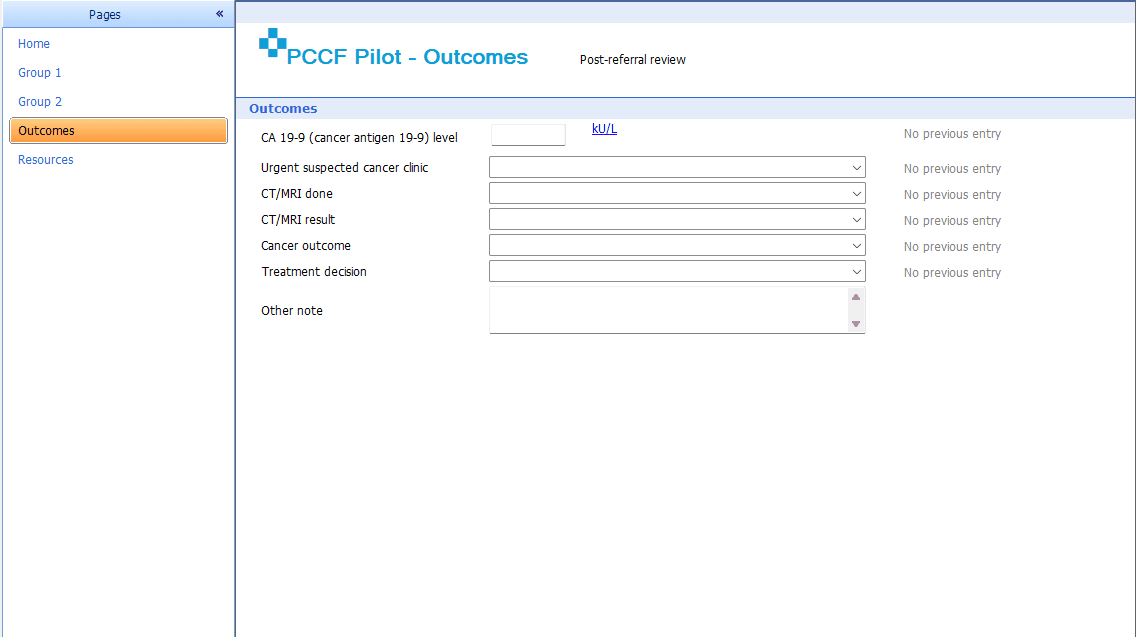
Once the patient has been referred to the pilot, the Outcomes page of the Ardens Pancreatic Cancer Case Finding Pilot template can be used to record completed referrals, treatment decisions and any investigations undertaken.
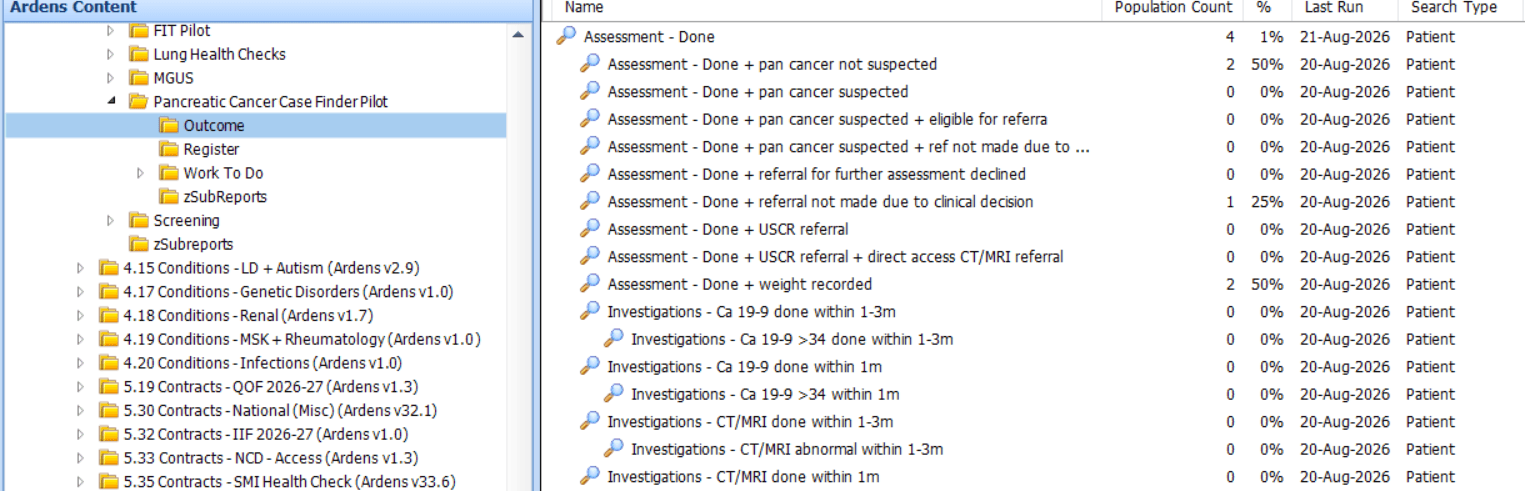
Reports are also available to help practices monitor and track patient outcomes.
❓FAQs
Which phase should my practice use?
Use the phase that matches the practice’s pilot start window. A patient will only appear when the qualifying event falls within that report’s defined date range.
What is the difference between Register, Case Finder / Work To Do, Review and Outcome reports?
Register: patients who broadly meet the pilot criteria.
Case Finder / Work To Do: patients needing first review or action.
Review: patients you may wish to review but excluded from the pilot due to end of life, pancreatic cancer diagnosis.
Outcome: what happened after assessment or referral.
What is the difference between Group 1 and Group 2?
Group 1 is for patients where unintentional weight loss has already been recorded.
Group 2 is for patients who meet the wider criteria but need further assessment of weight trend and eligibility.
🏫 Additional Support
To further your understanding of the Ardens resources:
Book training for your GP Practice, PCN or ICB
Contact our Support Team for support in real time